Computer & Information Science at Allegheny College
Think Beyond the Code
Computing is more than learning to program. It is learning how to think, how to solve problems, how to build what does not yet exist, and how technology can shape the world around us.
Since its founding in 1979, the Department of Computer & Information Science at Allegheny College has built its program around this idea. One of the earliest computer science programs at a small liberal arts college, Allegheny’s program became the foundation for the Liberal Arts Computer Science “Model Curriculum,” an approach that recognizes that the strongest computer scientists need more than technical proficiency. They need the ability to reason deeply, communicate clearly, work collaboratively, and understand the human consequences of the systems they create.
Build a Foundation. Explore What’s Possible.
At Allegheny, students build that foundation from the ground up. Through programs in Computer Science, Data Science, Informatics, and Software Engineering, students engage with both the theory and practice of computing: from programming, data structures, and discrete mathematics to algorithms, computer architecture, programming languages, software systems, operating systems, distributed systems, and advanced applications.
The result is a broad and rigorous education that prepares students not simply to use existing technology, but to understand it, question it, and create what comes next.
Learn by Building
And students do not just learn computing. They do computing.
Nearly every course incorporates a formal laboratory component, giving students sustained opportunities to experiment, build, test, and solve real problems using modern hardware and software. Students design and release applications, analyze data, develop open-source tools, build large-scale software systems, work with robots and mobile devices, and conduct research alongside faculty.
Team-based development and interdisciplinary collaboration are woven throughout the curriculum, reflecting the reality of professional computing: the most meaningful problems rarely fit neatly within a single discipline or are solved by one person working alone.
Work Closely. Go Further.
That close collaboration is made possible by Allegheny’s distinctive environment. Small classes, individual attention, and close student-faculty relationships allow students to work directly with professors as researchers, developers, and collaborators.
Department laboratories in Alden Hall provide students with dedicated spaces to turn ideas into working systems. These include an active-learning classroom, a software development laboratory for large team-based projects, and a laboratory dedicated to advanced coursework and research.
Beyond the classroom, internships with organizations such as IBM, PNC, and MITRE, as well as undergraduate research leading to publications and presentations at international conferences, connect students’ work to the wider computing community.
Technology Has Consequences
But technical excellence is only part of the Allegheny experience.
Computing is a human discipline.
Every algorithm, application, dataset, and software system exists within a social world. Throughout the curriculum, students examine the social, professional, ethical, and human dimensions of technology, developing the judgment to ask not only Can we build it?, but Should we? Who does it serve? Who might it affect?
Collaboration across disciplines and the broader liberal arts curriculum give students the perspective to approach computing as both a technical field and a force that increasingly shapes every community.
Prepare for What Comes Next
Careers in computing remain among the fastest-growing fields in STEM, but Allegheny prepares students for more than their first job.
It prepares them to become thoughtful engineers, creative problem-solvers, rigorous researchers, effective collaborators, and responsible leaders.
Here, students gain the foundational knowledge to pursue advanced study, the practical experience to succeed in a rapidly changing profession, and the intellectual breadth to help shape what computing becomes next.
Our Shared Values
All of this work rests on four values that guide how we teach, mentor, and work together as a department.
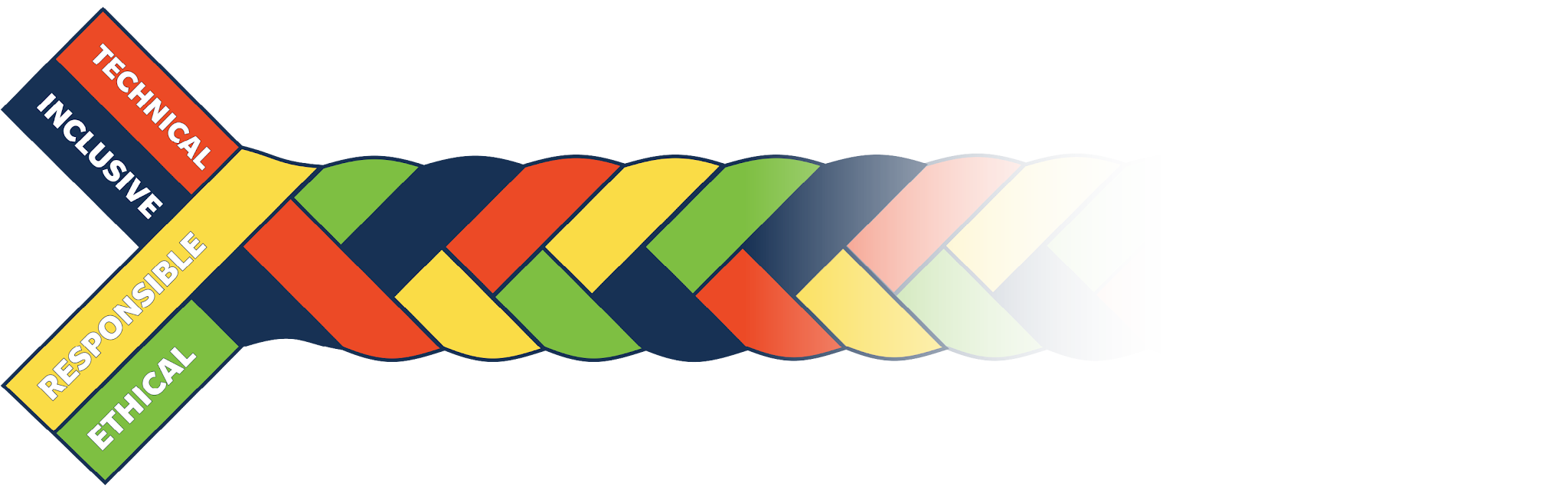
- Technical. We aim to achieve competence and excellence in technical knowledge, its applications, and effects.
- Inclusive. We provide an inclusive community environment which invites and celebrates diversity of experience, thought, and belief.
- Responsible. We honor commitments and take responsibility for our actions and outcomes.
- Ethical. We make decisions rooted in principles of equity and justice, focusing on the greater good of the communities we impact.
These values also shape our day-to-day expectations. Our department policies put them into practice.
Understand It. Build It. Lead It.
At Allegheny, we do not just teach students how to work with technology. We teach them how to understand it, build it, and lead with it.